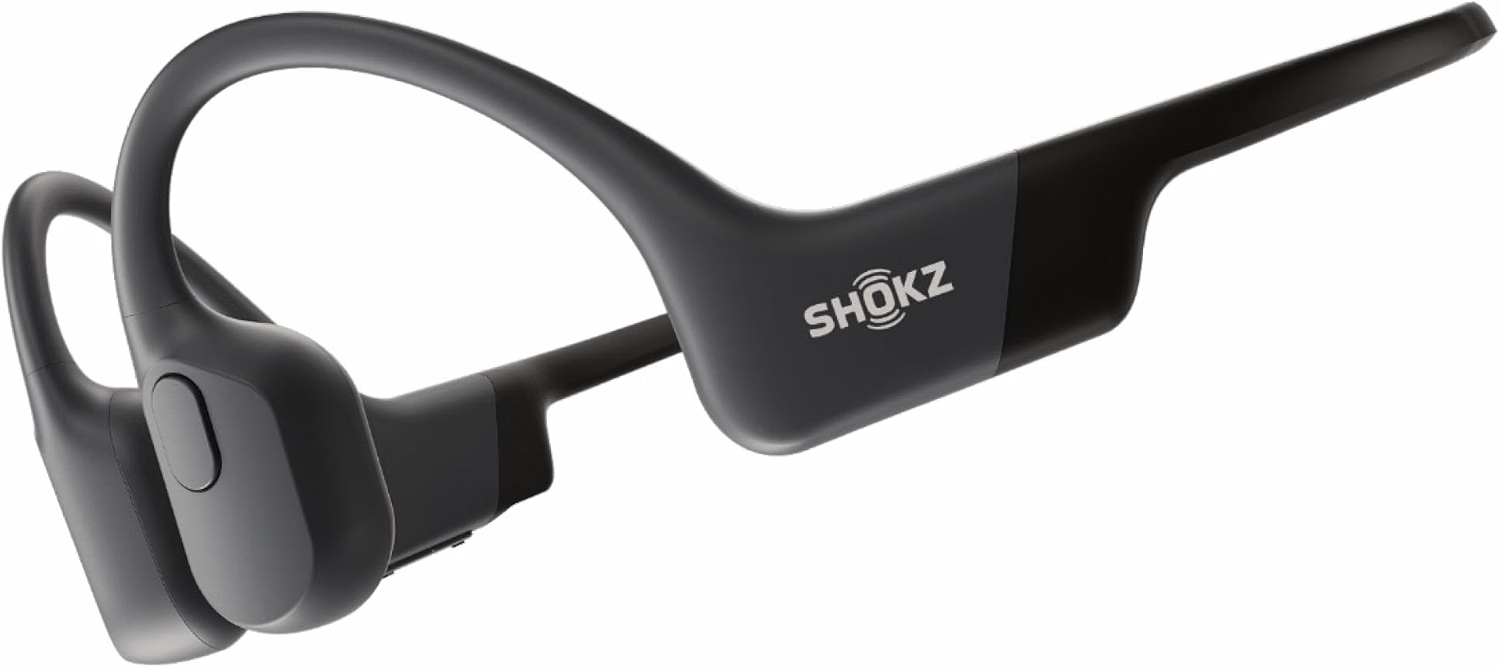
Shokz OpenRun Bone Conduction Headphones
Headphones that sit in front of the ears, not in them — so he can hear his podcast and the cyclist about to flatten him.
Bone conduction sounds like a gimmick until you try it. The OpenRun sits on the cheekbones and transmits sound through them, leaving the ears completely open — which means he can run on a road, hear traffic, and still listen to whatever podcast he claims is improving him. They don't fall out, because there's nothing in the ear to fall out. They don't get disgusting with sweat the way earbuds do. Eight hours of battery, IP67 water resistance, and a wraparound band that stays put under a cycling helmet. The audio won't trouble his hi-fi — bone conduction never does — but for exercise, where situational awareness matters more than bass response, these are the standard for good reason.
Tom's buying notes
The standard size fits most heads; a Mini version exists for smaller ones. If he swims, note these are sweat-proof but not for swimming — Shokz make the OpenSwim for that. Frequently discounted below RRP, so shop around. Black is the safe colourway.
Common questions
How is the sound quality compared to normal earbuds?
Honestly: worse, particularly bass. That's the trade-off for open ears. For podcasts and audiobooks the difference barely registers; for music it's noticeable but perfectly listenable. Nobody buys these for critical listening — they buy them to stay aware of traffic.
Do they leak sound so everyone can hear his music?
At high volume, a little — someone standing next to him in a quiet room would catch a tinny murmur. Outdoors or in a gym, nobody will notice. It's far less antisocial than a phone speaker, which some gym-goers have apparently decided is acceptable.