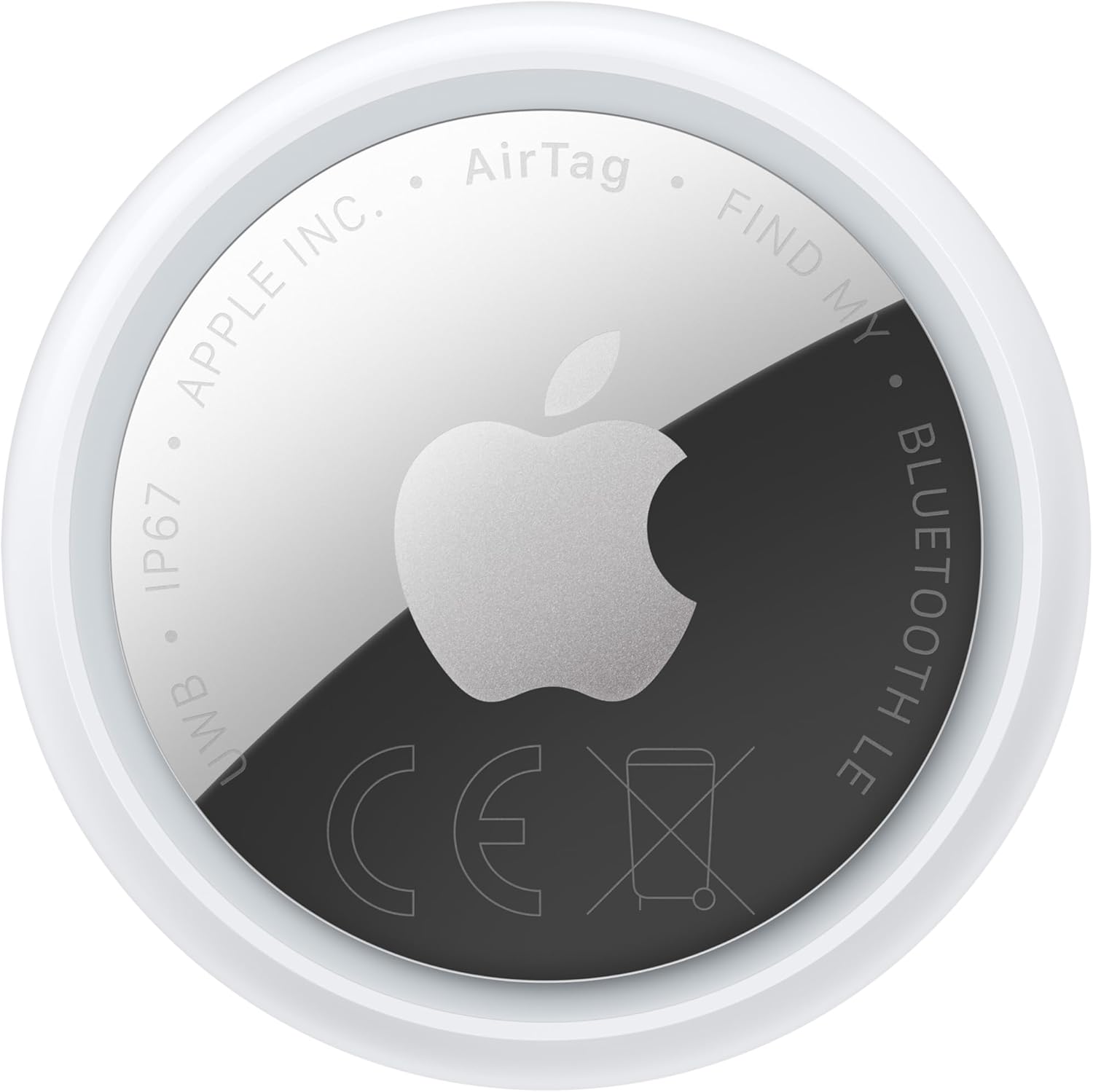
Apple AirTag
A £35 disc that ends the daily keys-wallet-panic ritual. If he owns an iPhone and ever loses anything, this earns its keep in a week.
The AirTag is one of those rare pieces of tech that does exactly one thing and does it properly. Drop it in a bag, on a keyring or in a suitcase, and his iPhone can find it — precisely, in the house, using the phone's sensors to point him at the sofa cushion, or globally, via Apple's Find My network, which uses every iPhone on the planet as a relay. The battery is a standard coin cell that lasts about a year and costs a pound to replace. I resisted these for ages on the grounds that I don't lose things, a claim my family found very funny. Checked luggage on a flight is where it genuinely shines: you'll know your bag missed the connection before the airline does.
Tom's buying notes
One AirTag is £35; the four-pack is around £119 and better value if he travels. Note there's no keyring hole — you need a holder (Belkin's are about £10; Apple's leather ones are nice and overpriced, which is on brand). Only works with iPhones — for an Android man, buy a Chipolo or Samsung SmartTag instead.
Common questions
Does the AirTag work with Android phones?
No — it needs an iPhone to set up and track. If he's an Android user, the Chipolo ONE Point or Samsung Galaxy SmartTag2 do the same job on Google's and Samsung's networks respectively. Check which phone he carries before buying; this is the one way to get this gift wrong.
Is one enough, or should I get the four-pack?
Start with one for whatever he loses most — usually keys. The four-pack (around £119) makes sense for someone who travels: keys, wallet, main suitcase, and one spare for the golf bag or camera bag. Most people who buy one end up buying more, which tells you something.